Mastering Depth: A Guide to Seahorse 3D Multilayer Laser Cut Files for Intricate Wall Art
The intersection of digital design and physical craftsmanship has opened new avenues for interior decoration, allowing creators to produce museum-quality pieces from the comfort of their workshops. Among the most captivating subjects in this realm is marine life, specifically the seahorse, with its intricate curves and natural elegance. Utilizing Seahorse 3D Multilayer Laser Cut Files enables artisans to transform flat materials into stunning, dimensional shadow boxes that capture light and attention. This guide explores the technical nuances, material considerations, and creative applications of these specialized designs, focusing on the popular 250 x 250 mm format.
Understanding the Multilayer Architecture
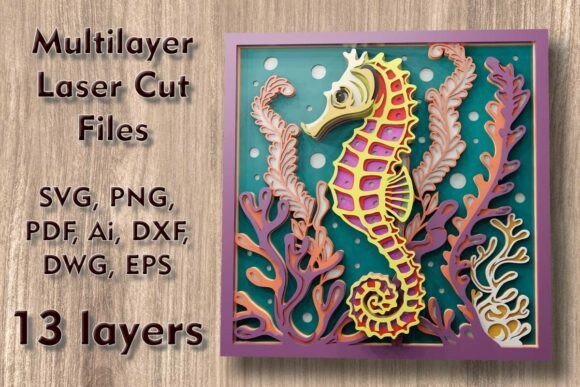
Unlike traditional two-dimensional cutouts, a 3D layered design relies on depth perception created by stacking multiple distinct layers. The Seahorse Mundala Svg design exemplifies this approach, consisting of thirteen separate layers that work in harmony to create a cohesive image. Each layer represents a different depth plane, from the background elements to the foreground details of the seahorse’s body and surrounding mandala patterns.
When working with Seahorse 3D SVG Multilayer Laser Cut Files, it is crucial to understand that the visual impact is derived from the shadows cast between these layers. The standard size for this specific design is 9.85 inches wide by 9.85 inches high, which translates to approximately 250 x 250 mm. This square format is ideal for creating balanced shadow boxes that fit seamlessly into gallery walls or serve as standalone decorative pieces. The thirteen-layer structure provides sufficient complexity to create a rich visual texture without becoming unmanageably thick or difficult to assemble.
Material Selection and Compatibility
One of the primary advantages of using versatile vector files is the ability to experiment with various substrates. The choice of material significantly influences the final aesthetic and structural integrity of the piece. Common materials compatible with these files include plywood, paper, cardstock, MDF, wood, acrylic, cardboard, and even aluminum. Each material offers unique characteristics:
- Plywood and Wood: Ideal for rustic or natural-themed decor. The grain adds organic texture, and the rigidity ensures the layers remain flat over time.
- Acrylic: Provides a modern, sleek look. Transparent or colored acrylics can create interesting light-refracting effects, especially when backlit.
- Paper and Cardstock: Perfect for lightweight projects or intricate details that might be challenging to cut in thicker materials. These are excellent for greeting cards or smaller framed art.
- MDF: Offers a smooth surface that takes paint well, allowing for custom color schemes that match specific interior design palettes.
When selecting materials, consider the kerf width of your cutting machine. Laser cutters, CNC routers, and blade-based machines like Cricut or Silhouette each remove material differently. Adjusting your design settings to account for this ensures a snug fit during assembly.
Scaling Considerations and Design Integrity
A frequent question among creators is whether the design can be resized. The answer is yes, but with caveats. The Seahorse 3D Multilayer Laser Cut Files are vector-based, meaning they can be scaled up infinitely without losing resolution. Increasing the size beyond the standard 250 x 250 mm is generally safe and can result in impressive large-scale wall installations. However, reducing the design requires caution.
As the overall dimensions shrink, the thin elements within the thirteen layers—such as the delicate tendrils of the mandala or the fine details of the seahorse’s tail—may become too fragile to cut or handle. If you intend to downsize the project, it is advisable to test cut a single layer first to ensure the structural integrity of the finest details. Maintaining the original proportions is key to preserving the artistic intent of the design.
Workflow for Digital Crafters
Upon purchase, users receive a comprehensive ZIP folder containing multiple file formats to accommodate various software and hardware setups. This includes SVG, layered SVG files, DXF, DWG, EPS, AI, PNG, and PDF. This diversity ensures compatibility with a wide range of tools, from consumer-grade cutting machines to industrial CNC routers.
Preparing the Files
For users of Cricut Design Space or Silhouette Studio, the layered SVG files are particularly valuable. These files preserve the separation of the thirteen layers, allowing for easy import and organization. Before sending the job to the machine, it is essential to check the layer order and assign appropriate cut settings for each material type. For laser cutter users, DXF and AI files provide precise vector paths that can be imported into software like LightBurn or Illustrator.
Cutting and Assembly
The cutting process varies by machine. Laser cutters offer speed and precision, sealing the edges of wood and acrylic to prevent fraying. CNC routers are excellent for thicker woods, while blade cutters like the Cricut or Silhouette are best suited for paper, cardstock, and thin vinyl. Regardless of the method, patience during the weeding and removal process is vital to avoid breaking delicate connections.
Assembly is where the magic happens. Start with the background layer and work your way forward, using spacers or adhesive foam tape to create consistent gaps between layers. These gaps are critical for creating the shadow effects that define 3D art. Ensure each layer is aligned perfectly with the previous one to maintain the symmetry of the seahorse and mandala patterns.
Applications in Home Decor and Gifting
The versatility of the Seahorse Mundala Svg extends beyond simple wall hangings. Here are several practical applications for this design:
- Shadow Box Art: The most common application, where the layered piece is housed in a deep frame. This protects the artwork while enhancing the 3D effect through controlled lighting.
- Custom Greeting Cards: By using cardstock or heavy paper, crafters can create luxurious, hand-made cards for special occasions. The intricate details convey thoughtfulness and effort.
- Room Dividers: Larger scaled versions can be used as decorative panels in room dividers, adding an artistic touch to open-plan living spaces.
- Educational Tools: Educators can use the assembly process to teach students about geometry, layering, and marine biology, combining art with science.
Enhancing Visual Impact with Lighting
To truly unlock the magic of the season or any thematic display, consider integrating lighting into your project. LED strip lights placed behind the top layer or around the inner edges of the shadow box frame can highlight the contours of the seahorse. Warm white lights create a cozy, inviting atmosphere, while cool whites or colors can emphasize the modern aspects of the mandala design. The interplay of light and shadow across the thirteen layers adds dynamic movement to the static piece, making it a focal point in any room.
Technical Tips for Best Results
To ensure professional-quality results, keep the following tips in mind:
- Test Cuts: Always perform a test cut on a scrap piece of your chosen material to verify power, speed, and focus settings.
- Clean Edges: Sand wooden layers lightly if necessary to remove char marks from laser cutting, ensuring a clean finish before assembly.
- Adhesive Choice: Use acid-free glue for paper projects to prevent yellowing over time. For wood and acrylic, strong craft adhesives or epoxy may be required for durability.
- Layer Alignment: Use registration marks or a jig to help align the layers accurately during assembly. Misalignment can disrupt the visual flow of the design.
By understanding the technical requirements and creative possibilities of Seahorse 3D Multilayer Laser Cut Files, creators can produce exceptional works of art that blend technology with traditional craftsmanship. Whether you are a hobbyist looking to upgrade your home decor or a professional crafter seeking unique products for your business, this design offers a robust foundation for innovation. The combination of detailed vector paths, versatile material compatibility, and the inherent beauty of the seahorse motif makes this a standout choice for modern digital fabrication.