Creating Depth and Dimension: A Guide to 3D Vase with Flowers Multilayer Laser Files for Wall Decor
In the evolving world of digital crafting and home decoration, flat designs are giving way to immersive, three-dimensional experiences. One of the most captivating trends in this space is the use of multilayer laser cut files to create shadow boxes and wall art. Among these designs, the Vase with Flowers stands out as a timeless classic that blends organic beauty with geometric precision. This article explores the intricacies of using 3D SVG multilayer files, specifically focusing on a design sized at 250mm H x 230mm W (approximately 9.85 x 9.06 inches), to help you understand how to transform digital vectors into tangible masterpieces.
Understanding Multilayer SVG Design
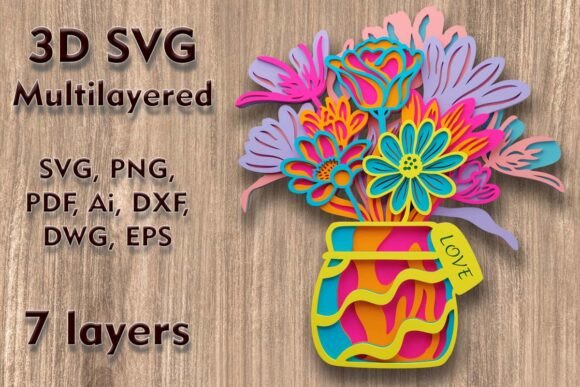
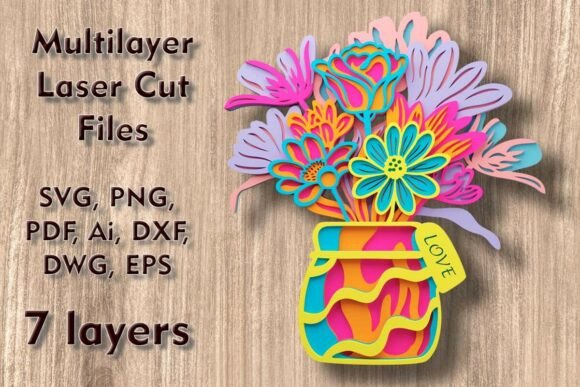
Before diving into the specific "Vase with Flowers Mundala Svg," it is essential to understand what makes a multilayer file different from standard cutting projects. Traditional vector files often result in a single-layer cutout. However, a 3D Multilayered SVG Design consists of several separate layers—typically seven in high-quality kits like this one—that are stacked upon each other with spacers or adhesive foam tape in between.
This stacking technique creates depth, shadows, and highlights that mimic real-life perspective. When light hits the artwork, the gaps between layers cast soft shadows, enhancing the visual impact. For beginners, this might seem complex, but modern software and precise cutting machines have made this process accessible to hobbyists and professionals alike.
The Significance of Layer Count and Detail
The specific design discussed here features 7 separate layers. This number is significant because it provides enough depth to create a convincing 3D effect without becoming overly bulky or difficult to assemble. Each layer represents a different plane of the image: the background, the vase body, the stems, the leaves, and the various petals of the flowers.
When working with such detailed designs, it is crucial to recognize that every layer contributes to the final narrative of the piece. Removing or merging layers can flatten the image and lose the intended artistic effect. Therefore, maintaining the integrity of all seven layers is key to achieving the "enchanting Home Wall decor" promised by the design.
Material Selection: Beyond Wood
One of the greatest advantages of digital vector files is their versatility regarding materials. While many enthusiasts immediately think of wood, the Vase with Flowers design is compatible with a wide array of substrates. Understanding the properties of each material can help you choose the right one for your specific aesthetic and functional needs.
- Plywood and MDF: These are the most popular choices for laser cutting. They offer structural rigidity and a natural, warm finish that complements floral designs. Birch plywood, in particular, has a fine grain that cuts cleanly.
- Paper and Cardstock: Ideal for those using electronic cutting machines like Cricut or Silhouette. Paper allows for vibrant colors and intricate details that might be lost in thicker materials. It is also lighter, making it easier to hang.
- Acrylic: For a modern, glossy look, acrylic can be used. It reflects light beautifully, adding a contemporary twist to the traditional floral motif.
- Cardboard and Aluminum: Less common but viable options. Cardboard offers an eco-friendly, rustic vibe, while aluminum provides an industrial, durable finish suitable for outdoor or high-traffic areas.
Choosing the right material depends on your machine’s capabilities and the desired final look. For instance, a Glowforge laser cutter excels with wood and acrylic, while a Cricut Maker is perfect for cardstock and thin cardboard.
Technical Considerations: Size and Scaling
The standard size for this specific Vase with Flowers 3D SVG Multilayer Laser Cut Files is 250 mm H x 230 mm W (9.85 x 9.06 inches). This dimension is carefully calculated to balance detail and manageability. However, crafters often wish to customize the size to fit specific wall spaces or shadow box frames.
The Rule of Scaling
It is generally safe to increase the size of the design. Enlarging the file maintains the proportion of the cut lines and usually results in a more robust structure. However, caution is advised when reducing the design.
As you shrink the image, the thin elements—such as flower stamens, delicate leaf veins, or narrow vase contours—may become too small for your machine to cut accurately or too fragile to handle during assembly. If you must reduce the size, consider simplifying the design or using a material that holds fine details well, such as high-quality cardstock rather than thick plywood.
File Formats and Compatibility
Accessibility is a cornerstone of modern digital crafting. Upon purchase, users receive a ZIP folder containing a comprehensive suite of file formats, ensuring compatibility with virtually any cutting software or hardware. This inclusivity supports the E-E-A-T principle by providing reliable, versatile tools for creators.
- SVG and Layered SVG: The gold standard for web-based cutters like Cricut Design Space and Silhouette Studio. Layered SVGs preserve the separation of the seven layers, saving hours of manual sorting.
- DXF and DWG: Essential for AutoCAD users and professional CNC operators. These formats ensure precise geometric data transfer.
- EPS and AI: Preferred by graphic designers using Adobe Illustrator. These allow for easy editing of colors and paths before sending to the cutter.
- PNG and PDF: Useful for previewing the design, printing instructions, or using with software that does not support vector imports directly.
This variety ensures that whether you are a hobbyist with a home desktop cutter or a professional with an industrial CNC router, you can utilize the Vase with Flowers Mundala Svg effectively.
Practical Applications in Modern Home Decor
Why choose a 3D laser-cut vase over a printed picture or a real flower arrangement? The answer lies in longevity, customization, and artistic expression. Unlike real flowers, which wilt, a wooden or paper 3D vase is a permanent fixture that captures the beauty of nature without maintenance. It fits seamlessly into various interior design styles, from bohemian and rustic to modern minimalist.
Furthermore, creating this decor yourself adds a personal touch that mass-produced items lack. You can paint the layers in monochromatic tones for a subtle shadow effect or use contrasting colors to make the flowers pop. This creative freedom transforms a simple crafting project into a unique piece of art that reflects your personal style.
Common Misunderstandings
A common assumption is that 3D layering requires advanced engineering skills. In reality, if the file is well-designed—with proper registration marks and clear layer separation—the assembly is straightforward. Another misconception is that only expensive laser cutters can handle these files. As noted, electronic die-cutting machines like Cricut and Silhouette are fully capable of handling the paper and cardstock versions of this design, making it accessible to a broader audience.
Conclusion
The Vase with Flowers Multilayer Laser Files represent more than just a digital product; they are a gateway to creative expression and personalized home decor. By understanding the importance of layering, material selection, and proper scaling, crafters can unlock the full potential of this design. Whether you are upgrading your crafting portfolio with a new challenge or looking to add a touch of enchanting depth to your living space, this 7-layer SVG design offers a perfect blend of technical precision and artistic beauty. With the right tools and a bit of patience, you can transform simple sheets of wood or paper into a stunning 3D masterpiece that celebrates the enduring appeal of floral art.
For those ready to begin, remember to download the complete ZIP folder, select your preferred material, and respect the delicate balance of the design’s dimensions. Happy crafting!