Creating Depth and Dimension with Jellyfish 3D SVG Multilayer Paper Files for Shadow Box Art
The evolution of digital crafting has moved far beyond simple two-dimensional decals. Today, makers are increasingly drawn to projects that offer tactile depth and visual complexity. Among the most captivating designs in this space is the Jellyfish 3D SVG Multilayer Paper Files collection. This specific design transforms a flat digital concept into a tangible piece of wall art, leveraging the interplay of light and shadow to mimic the ethereal movement of marine life. For crafters evaluating their next project, understanding the nuances of multilayered designs is essential to achieving professional results.
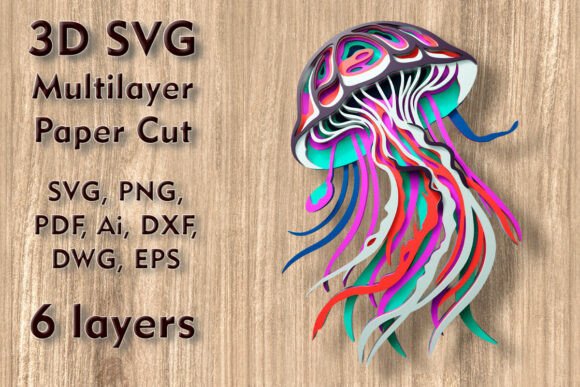
Unlike standard single-layer cutouts, the Jellyfish Mandala SVG is engineered as a six-layer composition. This structure allows for a gradual build-up of detail, where each stratum contributes to the overall illusion of three-dimensionality. When assembled correctly within a shadow box frame, the result is not merely a picture of a jellyfish, but a sculptural representation that changes appearance depending on the viewer’s angle and the ambient lighting. This article explores the practical considerations, material choices, and comparative advantages of using these specialized files for home decor and gifting.
Understanding the Multilayer Architecture
The core appeal of the Jellyfish 3D SVG Multilayer Paper Cut Files lies in their architectural precision. The design consists of six separate layers, each meticulously spaced to create depth. The base layer typically provides the foundational shape and background context, while subsequent layers add intricate details such as tentacles, internal patterns, and foreground elements. This separation is crucial because it prevents the "muddy" look that often occurs when too many details are compressed into a single plane.
When working with a design of this nature, scale is a critical variable. The standard dimensions provided are 9.85 inches in height by 7.09 inches in width (approximately 250 x 180 mm). This size is ideal for standard shadow boxes and medium-sized wall displays. While the vector nature of SVG, DXF, and AI files allows for easy scaling up, crafters must exercise caution when reducing the size. The design includes thin, delicate elements intended to represent the fine tendrils of a jellyfish. If the overall dimensions are shrunk significantly, these thin lines may become too fragile to cut cleanly or may tear during the weeding and assembly process. Therefore, maintaining the recommended aspect ratio and minimum size ensures structural integrity.
Material Selection: Balancing Aesthetics and Durability
One of the distinct advantages of the Jellyfish 3D SVG Multilayer Paper Files is their versatility across various materials. The choice of substrate dramatically alters the final aesthetic and durability of the piece. Here is a breakdown of common materials and their suitability:
- Paper and Cardstock: Ideal for beginners and those seeking a soft, traditional look. High-quality cardstock holds creases well and is easy to glue. However, it is susceptible to humidity and fading over time.
- Plywood and MDF: These wood-based materials offer a rustic, organic feel that complements the marine theme. Laser cutting plywood creates charred edges that can add contrast, though sanding may be required for a cleaner finish. MDF provides a smooth surface perfect for painting but lacks the natural grain of plywood.
- Acrylic: For a modern, translucent effect, acrylic is unmatched. It mimics the gelatinous transparency of a real jellyfish. However, it requires specific laser settings to avoid melting and can be more challenging to assemble due to the slick surface.
- Cardboard and Aluminum: Recycled cardboard offers an eco-friendly, textured option, while aluminum provides an industrial, durable alternative suitable for outdoor or high-traffic areas, though it requires specialized cutting tools.
Selecting the right material depends largely on the intended display environment. For a bedroom or living room, paper or wood offers warmth. For a bathroom or kitchen, where moisture may be present, acrylic or sealed wood is a more prudent choice.
Compatibility with Cutting Technologies
A major consideration for any digital file purchase is machine compatibility. The Jellyfish Mandala Svg is designed to work seamlessly with a wide range of fabrication tools. Upon purchase, users receive a ZIP folder containing multiple file formats, ensuring broad accessibility:
- SVG and Layered SVG: Perfect for Cricut Design Space and Silhouette Studio. The layered SVGs are particularly useful as they allow users to import each of the six layers separately, saving time on manual separation.
- DXF and DWG: Standard formats for CAD software and CNC routers. These are essential for users operating industrial-grade machines or those who prefer precise vector control in programs like AutoCAD.
- AI and EPS: Preferred by Adobe Illustrator users for further customization before cutting.
- PNG and PDF: Useful for previewing the design, printing templates for hand-cutting, or sharing visual references.
Whether you are using a desktop die-cutter like a Cricut or Silhouette, or a more powerful laser cutter like a Glowforge, the file structure remains consistent. Laser users will appreciate the clean vector paths that minimize unnecessary travel time, while die-cutter users benefit from the clear layer distinction that simplifies the matting process.
Comparative Analysis: Multilayer vs. Single-Layer Designs
When deciding between the Jellyfish 3D SVG Multilayer Paper Files and simpler alternatives, it is helpful to weigh the effort against the outcome. Single-layer designs are faster to produce and require less material. They are suitable for quick gifts or large-scale installations where detail is less critical. However, they lack the visual impact and perceived value of multilayered art.
In contrast, the six-layer jellyfish design demands more time for cutting, weeding, and assembly. Each layer must be aligned precisely, often requiring spacers or foam tape to maintain the gap between levels. This additional labor results in a piece that looks professionally manufactured rather than handmade. For sellers on platforms like Etsy or at local craft fairs, this perceived quality can justify a higher price point. For hobbyists, the satisfaction of creating a complex, gallery-worthy piece often outweighs the extra time investment.
Furthermore, compared to pre-made wall art, creating your own using these files allows for complete customization. You can choose color palettes that match your existing decor, select materials that fit your budget, and adjust the lighting within the shadow box to highlight specific layers. This level of personalization is rarely available in mass-produced items.
Practical Assembly and Display Tips
To maximize the potential of the Jellyfish 3D SVG Multilayer Paper Cut Files, consider the following assembly strategies. First, ensure your cutting machine is calibrated correctly. Blunt blades can drag on intricate curves, leading to jagged edges that disrupt the smooth flow of the jellyfish’s tentacles. Second, use acid-free adhesive for paper projects to prevent yellowing over time. For wood or acrylic, strong cyanoacrylate glues or epoxy resins provide a durable bond.
Lighting plays a pivotal role in 3D paper art. Installing a small LED strip along the inner edge of the shadow box frame can cast shadows that accentuate the depth of each layer. Warm white LEDs tend to enhance the organic feel of wood and paper, while cool white lights can make acrylic designs appear more vibrant and modern.
Making the Right Choice for Your Project
The Jellyfish 3D SVG Multilayer Paper Files are an excellent choice for crafters who enjoy detailed work and want to create standout home decor. They are particularly well-suited for those who already own a cutting machine and are looking to expand their portfolio beyond simple stickers or cards. If you are new to multilayer crafting, start with paper or cardstock to master the alignment process before moving to more expensive materials like wood or acrylic.
However, if you are short on time or prefer minimalist aesthetics, a single-layer design might be more appropriate. Additionally, if you do not have access to a cutting machine, the complexity of this design makes hand-cutting impractical. In such cases, considering a service that offers laser cutting based on these files might be a viable alternative.
Ultimately, the decision to use these files depends on your desire for depth, your willingness to engage in a multi-step assembly process, and your appreciation for intricate design. With the right materials and careful attention to detail, the Jellyfish Mandala SVG can transform a blank wall into a focal point of serene beauty, offering a unique blend of digital precision and handmade charm.