Bow Heart Wall Art STL: A Guide to Flawless 3D Printed Décor
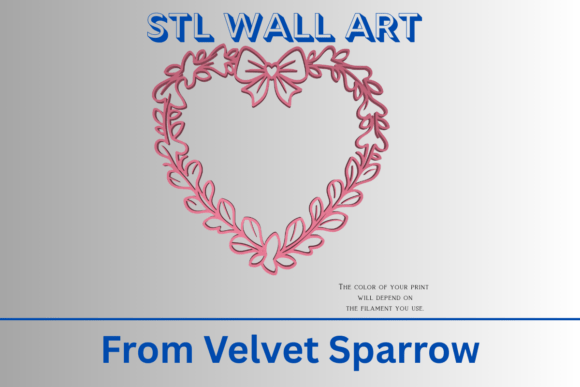
Creating personalized home décor has never been more accessible, yet many enthusiasts stumble at the starting line by overcomplicating their first projects. The Bow Heart Wall Art STL stands out as a remedy to this common pitfall. It is a simple, elegant, and beginner-friendly design that transforms digital files into charming physical objects. The leafy heart frame, topped with a decorative bow, forms a clean and continuous outline that prints effortlessly on virtually any 3D printer. Whether you are decorating a nursery, preparing for a wedding, or simply adding a touch of warmth to a bedroom, this model offers a reliable foundation. However, even with a "simple" file, mistakes in preparation and execution can lead to disappointing results. Understanding the nuances of this specific design ensures your final piece looks professional rather than amateurish.
Understanding the Appeal and Utility
Before diving into technical details, it is vital to recognize why this specific design resonates with such a broad audience. From entrepreneurs selling custom gifts to hobbyists looking for quick wins, the appeal lies in its versatility. The continuous outline is not just an aesthetic choice; it is a functional one. By avoiding floating parts and complex overhangs, the design minimizes the risk of print failure. This makes it ideal for Valentine’s Day décor, craft displays, or creative wall arrangements where consistency and speed matter. When you choose a model like this, you are prioritizing reliability without sacrificing elegance.
Common Mistakes in Slicing and Preparation
One of the most frequent errors users make is assuming that "no supports required" means "no attention required." While the Bow Heart Wall Art STL is designed to be support-free, improper slicing settings can still ruin the finish. Many beginners leave default layer heights too high, resulting in visible stair-stepping on the curved sections of the bow and heart. This detracts from the smooth, elegant look the design promises.
Another overlooked detail is orientation. Although the model is robust, printing it flat on the build plate might not always yield the best surface quality on the front face. Some users rush to hit "print" without checking how the layers will stack up against the visual plane. If the layer lines run horizontally across the prominent curves of the bow, they become much more noticeable under room lighting. A better approach is to rotate the model slightly in your slicer to align layer lines with the natural flow of the design, or to use a finer layer height, such as 0.12mm or 0.16mm, to ensure a seamless appearance.
Material Selection and Color Coordination
Selecting the wrong filament can undermine the structural integrity and visual appeal of your print. A common misconception is that all PLA filaments behave the same. For a wall hanging that might be exposed to sunlight near a window, standard PLA can warp or fade over time. If you intend to place this décor in a sunlit nursery or living area, consider using PLA+ or PETG for added durability and heat resistance.
Furthermore, color choice plays a critical role in the perceived quality of the print. Matte filaments often hide layer lines better than glossy ones, making them an excellent choice for this type of intricate outline. Conversely, using a translucent or glitter filament might highlight imperfections if the infill or wall thickness is not optimized. Always preview your print in the slicer’s layer view to ensure that the single solid piece maintains consistent wall thickness throughout. This prevents weak spots that could break during handling or installation.
Scaling and Dimensional Accuracy
The ability to scale the Bow Heart Wall Art STL to any size is a significant advantage, but it introduces risks if not managed correctly. Scaling up significantly without adjusting print settings can lead to sagging, especially on the wider sections of the bow. While the design is generally stable, extreme scaling may require slight adjustments to cooling fan speeds or print speed to maintain sharp corners and clean edges.
On the other hand, scaling down too much can cause nozzle clogging or loss of detail. The delicate tips of the leaves and the loops of the bow have minimum feature sizes. If you shrink the model below a certain threshold, these features may not print accurately, resulting in a blobby, undefined shape. Always check the dimensions of the smallest features against your printer’s nozzle diameter. A good rule of thumb is to ensure that no detail is smaller than two times the nozzle width to guarantee fidelity.
Post-Processing and Installation
Many creators forget that the job isn’t done when the print finishes. Removing the piece from the build plate requires care. Using a metal spatula aggressively can scratch the bottom surface or snap thin sections. It is advisable to let the bed cool completely before removal, allowing the part to release naturally. If adhesion was strong, a gentle flex of the build plate is safer than forceful prying.
For installation, consider the weight and mounting method. Since this is a single solid piece, it can be heavier than it looks, especially if printed with high infill. Drilling directly into the print is not recommended as it can crack the material. Instead, design or print a separate mounting bracket, or use strong adhesive hooks rated for the weight. This preserves the integrity of the art and ensures it stays securely on the wall.
Verifying File Integrity Before Printing
Before committing hours to a print, always inspect the STL file. Downloaded files can sometimes contain non-manifold edges or inverted normals, which confuse slicers. Use a mesh repair tool or your slicer’s built-in analysis feature to check for errors. A clean mesh ensures that the slicer generates accurate toolpaths, preventing gaps or weird artifacts in the final print. This step is crucial for maintaining efficiency and avoiding wasted filament and time.
In summary, the Bow Heart Wall Art STL is a fantastic resource for creating beautiful décor, but success depends on thoughtful preparation. By paying attention to slicing orientation, material choice, scaling limits, and post-processing care, you can avoid common pitfalls. This approach not only enhances the quality of your current project but also builds the skills necessary for more complex designs in the future. Whether you are a small business owner fulfilling orders or a parent decorating a child’s room, these practices ensure your final product is something to be proud of.