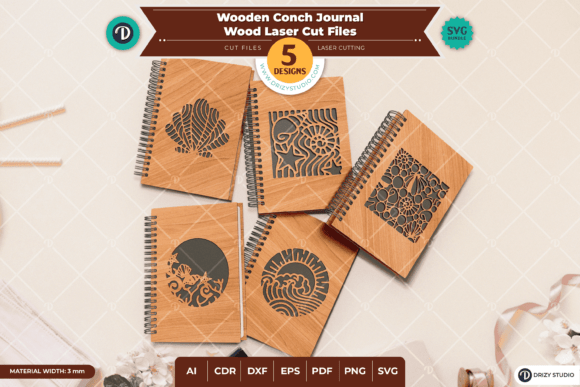
Conch Wood Journal Set of 5 - Wood Laser: A Practical Guide for Crafters
In the evolving landscape of digital fabrication, the intersection of traditional bookbinding and modern laser cutting offers a unique opportunity for creators. The Conch Wood Journal Set of 5 - Wood Laser Cut File represents a specific niche within this domain, providing a structured yet customizable solution for those looking to produce high-quality, tactile journals. For professionals, educators, and serious hobbyists who value both aesthetics and functionality, understanding the utility of such digital assets is crucial before committing to material costs and machine time.
This article evaluates the practical application of the Conch Wood Journal design, examining its file compatibility, structural integrity, and potential use cases. By focusing on real-world implementation rather than superficial praise, we aim to help you determine if this SVG set aligns with your current workflow or project requirements.
Understanding the Design and Structural Integrity
The core appeal of the Conch Wood Journal Set of 5 lies in its geometric precision and organic inspiration. Unlike standard rectangular notebooks, these journals utilize a conch-inspired shape that adds visual interest without compromising usability. The design is engineered specifically for laser cutting, meaning every vector path is optimized to minimize burn marks and ensure clean edges when processed through machines like the xTool or similar desktop laser cutters.
One of the most critical aspects of any laser-cut journal is the assembly mechanism. This set typically relies on interlocking tabs and slots, which require precise tolerances. The provided files are designed with a standard material width of 3mm in mind. This specification is vital because wood thickness can vary significantly between suppliers. If you are using plywood or MDF that deviates even slightly from 3mm, you may need to adjust the kerf settings in your software or scale the vectors slightly to ensure a snug fit. A loose fit results in a wobbly structure, while an overly tight fit can cause cracking during assembly.
The "Set of 5" designation implies variety in size or slight design variations, allowing for a cohesive collection. This is particularly useful for gift sets or product lines where consistency in branding is essential. The ability to produce five distinct but related items from a single purchase enhances the perceived value and utility of the digital file.
File Compatibility and Workflow Integration
For digital creators, the format of the source file is just as important as the final physical product. The download package for the Conch Wood Journal Set of 5 - Wood Laser includes a comprehensive range of formats: AI, CDR, DXF, EPS, PDF, PNG, and SVG. This diversity ensures compatibility with virtually any design or cutting software available on the market today.
- SVG and DXF: Ideal for users of LightBurn, xTool Creative Space, or Silhouette Studio. These formats preserve vector data, allowing for easy scaling and modification of cut lines.
- AI and EPS: Preferred by Adobe Illustrator users who may wish to customize the aesthetic elements, such as adding personalized monograms or altering the outer silhouette before sending it to the laser.
- PDF and PNG: Useful for previewing the layout or for those who might be using hybrid methods involving print-and-cut techniques, although the primary intent here is laser cutting.
The inclusion of these formats demonstrates a thoughtful approach to user accessibility. Whether you are a freelancer using open-source software or a marketing agency working within the Adobe ecosystem, the barrier to entry is minimal. You do not need to convert files or worry about lost data during translation, which streamlines the production process significantly.
Practical Applications and Target Audience
Who benefits most from this specific design? The versatility of the Conch Wood Journal makes it suitable for a wide array of applications beyond simple personal diaries.
Small Business Owners and Etsy Sellers
For entrepreneurs selling handmade goods, this set offers a ready-to-market product. The unique shape differentiates it from mass-produced notebooks, allowing for higher price points. Since the design is digital, there is no inventory cost until a sale is made. You can produce these on demand, reducing waste and storage needs. The professional finish of laser-cut wood appeals to customers looking for premium, eco-friendly stationery.
Educators and Workshop Leaders
Teachers and workshop facilitators can use these journals as part of creative kits. The assembly process itself can be a teaching tool for geometry, engineering, and fine motor skills. Providing students with a pre-cut kit that they assemble into a functional journal encourages ownership and pride in their work. The durability of wood ensures that these journals can withstand frequent handling in classroom environments.
Corporate Gifting and Branding
Businesses often seek distinctive gifts for clients or employees. A wooden journal with a company logo laser-engraved onto the cover serves as a lasting reminder of the brand. The Conch Wood Journal Set of 5 allows for batch production, making it feasible to create small runs for executive teams or special events. The natural texture of wood conveys warmth and authenticity, qualities that many modern brands strive to project.
Material Considerations and Assembly Tips
To achieve the best results with the Conch Wood Journal Set of 5 - Wood Laser Cut File, material selection is paramount. While the design specifies 3mm width, not all 3mm woods are created equal.
Recommended Materials:
- Birch Plywood: Offers a smooth surface ideal for engraving and has consistent layers that reduce chipping.
- Basswood: Softer and easier to cut, producing less smoke and residue, though it may dent more easily.
- MDF: Provides a uniform density and smooth edge but lacks the natural grain aesthetic some users prefer.
When assembling, dry-fit all pieces before applying any adhesive. This step helps identify any tight spots that may need light sanding. Use a high-quality wood glue for permanent bonds, and consider using clamps or heavy books to hold the journal closed while the glue dries. For the pages, standard acid-free paper is recommended to ensure longevity, especially if the journals are intended for sketching or archival writing.
Evaluating Long-Term Value and Limitations
It is important to approach this digital asset with realistic expectations. The Conch Wood Journal is a template, not a finished product. Its value is derived from your ability to execute the cut and assembly effectively. There is a learning curve associated with laser cutting, particularly regarding power and speed settings. First-time users should expect to run test cuts on scrap material to dial in their machine’s performance.
Additionally, while the design is robust, wooden journals are inherently heavier than their paper-bound counterparts. This may limit their portability for some users. However, this weight also contributes to a sense of substance and quality that paper cannot replicate. The durability of the cover means these journals can last for years, making them heirloom-quality items if cared for properly.
From a cost perspective, the initial investment is low since it is a digital download. The recurring costs are materials and machine maintenance. For high-volume producers, the efficiency of nesting multiple journals on a single sheet of wood can significantly reduce material waste, further improving profit margins.
Final Thoughts on Utility and Fit
The Conch Wood Journal Set of 5 - Wood Laser is a well-constructed digital resource for anyone interested in combining traditional craftsmanship with modern technology. It is not merely a decorative item but a functional tool for writing, sketching, and organization. Its strength lies in its adaptability; it can be a simple DIY project for a weekend crafter or the foundation of a small business product line.
If you have access to a laser cutter and enjoy working with wood, this file set provides a reliable starting point. It eliminates the time-consuming process of designing complex interlocking joints from scratch, allowing you to focus on customization and production. For those without laser cutting equipment, the files can still be sent to local makerspaces or online cutting services, though this will increase the per-unit cost.
Ultimately, the decision to use this design depends on your specific goals. If you seek a unique, tangible product that stands out in a digital world, the Conch Wood Journal offers a compelling blend of form and function. By understanding the technical requirements and material nuances, you can leverage this asset to create meaningful, high-quality journals that resonate with users and recipients alike.